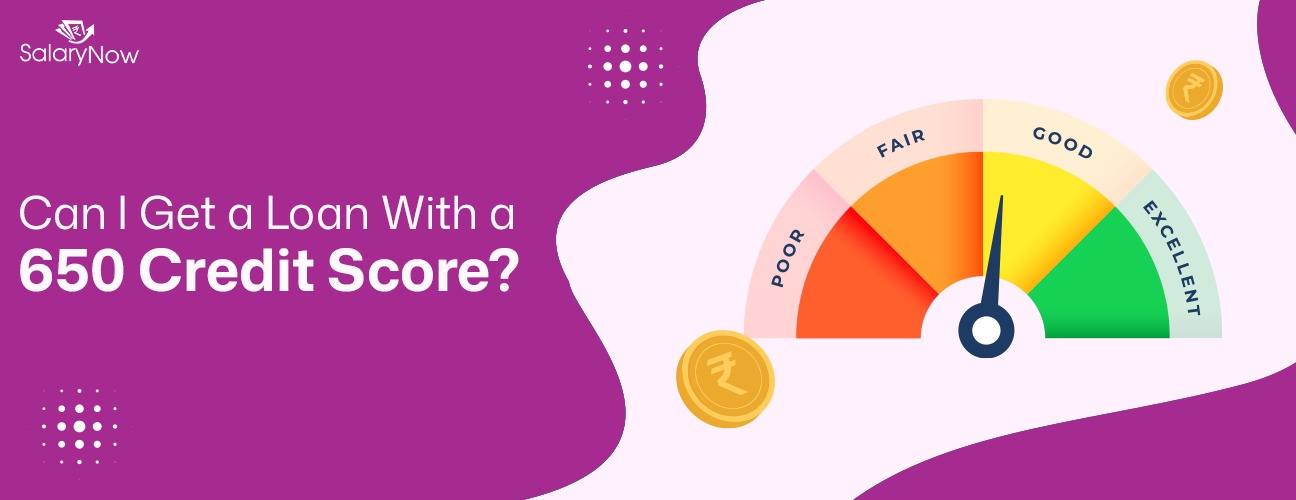
Can I Get a Personal Loan With a 650 Credit Score?
Yes, it may be possible to get a personal loan with a 650 credit score, but approval is not guaranteed. Lenders generally consider more than your credit score when assessing a personal loan application. They may also look at your income, employment profile, existing EMIs or other debts, repayment history, requested loan amount and overall ability to repay.
A 650 credit score does not automatically mean that an application will be approved or rejected. Different lenders have different eligibility criteria. Depending on the lender and the applicant's overall financial profile, a 650 score may affect eligibility, the loan amount offered, the interest rate or other loan terms.
Before applying, check your credit report, understand your existing financial commitments and choose a loan amount that fits comfortably within your repayment capacity. Avoid treating a particular credit score as a guarantee of approval.
What Does a 650 Credit Score Mean for a Loan?
In India, credit scores such as the CIBIL Score generally range from 300 to 900. There is no single credit-score threshold that guarantees approval for a personal loan from every lender.
A lender may consider your credit score along with your income, repayment history, existing debt obligations, employment details and requested loan amount. The lender's own risk and eligibility policies also matter.
This is why two applicants with the same 650 credit score may receive different loan decisions. For example, one applicant may have stable income, manageable existing EMIs and a consistent repayment history, while another may have higher existing debt or a shorter employment history.
Therefore, it is more useful to view a 650 score as one part of your overall credit and financial profile rather than as a guaranteed approval threshold.
What Factors Do Lenders Consider Besides Credit Score?
Income and repayment capacity
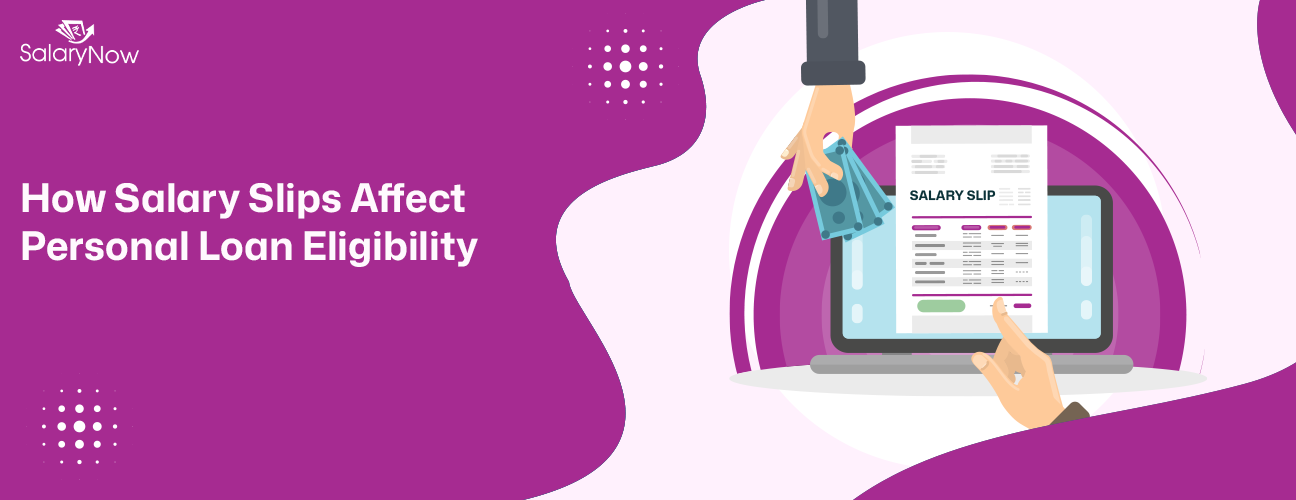
Your income helps a lender assess whether you can reasonably manage the proposed EMI along with your existing financial commitments. The loan amount should be appropriate for your budget rather than simply the maximum amount you may be offered. Lenders may also review your salary slip and personal loan eligibility to verify income, deductions and employment details.
For example, applicants earning around ₹21,000 per month can review the factors that may affect their personal loan eligibility, including income, credit profile and existing obligations.
Employment profile
Lenders may assess employment or income stability and may ask for information or documents that help verify your earnings and employment status.
Existing EMIs and other obligations
Existing personal loans, vehicle loans, credit-card balances and other obligations can affect your available repayment capacity. A high level of existing debt may make additional borrowing more difficult to manage.
Repayment history
A consistent record of making credit payments on time is an important part of your credit profile. Missed or late payments can affect how lenders view your application.
Credit utilisation
A large credit-card balance compared with the available credit limit may affect your credit profile. Keeping balances manageable is generally preferable, although there is no single utilisation percentage that guarantees loan approval.
Requested loan amount
The amount you apply for should be consistent with your income and repayment capacity. Asking for more than you can comfortably repay can increase financial pressure even if the application is technically eligible.
Lender-specific eligibility criteria
Every lender may use its own policies and assessment process. A credit score that is acceptable to one lender may not produce the same result with another lender.
7 Practical Ways to Improve Your Chances of Loan Approval
These steps cannot guarantee a higher credit score or loan approval. However, they can help you maintain a stronger credit profile and demonstrate responsible borrowing behaviour.
1. Make EMI and credit-card payments on time
Paying your credit obligations on time and consistently can help maintain a healthier credit profile. Avoid relying on a single payment to create an immediate score improvement; responsible repayment over time is more important.
2. Keep credit-card balances manageable
A high balance relative to your available limit may affect your credit profile. Try to use credit within an amount you can comfortably repay and avoid taking on unnecessary revolving debt.
3. Avoid unnecessary credit applications
Multiple applications within a short period may result in multiple hard enquiries. If you do not need new credit, avoid applying simply because a loan or credit-card offer is available.
4. Check your credit report for inaccuracies
Review your report for accounts, payment information or other details that are inaccurate or do not belong to you. If you find an error, raise a dispute through the appropriate credit-bureau or lender process.
5. Reduce existing debt where possible
Reducing outstanding obligations can improve your available repayment capacity. Do not take on new borrowing simply to create the appearance of a stronger credit profile.
6. Provide accurate and verifiable income and employment information
Make sure information supplied in the application is complete, current and supported by genuine documents. Inaccurate information can create problems during verification.
7. Apply for an affordable loan amount
Choose a loan amount and repayment period that fit your monthly budget. A loan should solve a genuine financial need without creating an EMI that is difficult to manage.
Does Paying Off Your Credit Card Help Improve Your Credit Score?
Paying down or paying off credit-card debt can help your credit profile, particularly when it reduces the balance reported relative to your available credit limit. However, the change may not appear immediately.
The timing depends on when the card issuer reports the updated balance to the credit bureau and when the bureau processes that information. Therefore, paying a balance today does not necessarily mean that your displayed credit score will change today.
If you have a credit card, continue making payments by the due date and manage the balance responsibly. The goal should be sustainable credit management rather than trying to create an instant score change.
How Quickly Can Your Credit Score Improve After Paying Off Debt?
There is no fixed number of days that applies to every borrower. An account update generally involves several stages.
1. You make the payment
The payment or balance reduction is recorded by the lender or card issuer.
2. The lender reports the updated information
Banks and NBFCs may have their own reporting cycles for sending account information to credit bureaus. The information may not be transmitted instantly.
3. The credit bureau processes the information
After receiving updated information, the credit bureau processes it and the relevant credit information or score may be updated.
Because the timing depends on the lender's reporting cycle and the bureau's processing, there is no universal number of days in which every borrower's score will change.
Should You Take a Loan and Repay It Immediately to Improve Your Credit Score?
Taking a loan solely to improve your credit score is generally not recommended. A new loan creates a financial obligation and may involve processing fees, other charges and a hard credit enquiry.
Repaying a loan immediately does not create a meaningful long-term repayment history simply because the account was opened and closed quickly. If your goal is to strengthen your credit profile, responsible management of existing credit is generally a more sensible approach.
That means making payments on time, keeping balances manageable, avoiding unnecessary applications and correcting genuine errors on your credit report.
How Long Does It Take to Build a Stronger Credit Score?
Building a stronger credit profile is generally a gradual process rather than an overnight change. Your credit profile can reflect several types of information, including payment behaviour, credit utilisation, length of credit history and the types of credit you have managed.
Payment history
A consistent record of making payments on time is an important part of your credit profile.
Credit utilisation
How much of your available revolving credit you are using can affect your credit profile.
Credit history
The length and management of existing credit accounts can form part of your credit profile.
Credit mix
Managing different types of credit responsibly may be considered as part of your overall credit information, although you should not take new credit simply to create a particular mix.
If your report contains inaccurate or outdated negative information, correcting the underlying information may be more appropriate than simply waiting for your score to improve.
How Does Your Credit Score Impact Personal Loan Approval?
Your credit score is one indicator a lender may use to assess credit risk, but it is not the only factor. There is no single score that applies to every lender or every personal loan application.
A lender may consider income, existing obligations, repayment history, employment profile, requested loan amount and other information in addition to the credit score.
Your credit profile may also affect the terms of an offer, such as the loan amount, interest rate or repayment period. A stronger credit profile may support better terms in some cases, but a particular score does not automatically guarantee the lowest rate or a particular loan amount.
What Should You Do Before Applying for a Personal Loan?
- Check your credit report and review it for genuine errors before applying.
- List your current EMIs and other financial obligations so you understand your existing liabilities.
- Calculate an EMI that fits comfortably within your current monthly income and budget.
- Keep your income and employment information accurate and be prepared to provide genuine supporting documents.
- Compare the total cost of borrowing, including interest and applicable processing fees or other charges, rather than comparing only the headline interest rate.
- Avoid applying to several lenders unnecessarily within a very short period.
- Review the loan amount, repayment period, interest rate, fees and other terms before accepting an offer.
- Borrow only when the repayment is affordable and the loan is required for a genuine financial need.
Common Credit Score Myths That Could Hurt Your Loan Application
“A new loan will definitely increase my score.”
Not necessarily. Taking new debt does not automatically improve a credit score. Responsible management of credit over time is more important than taking a loan solely to increase the score.
“Paying immediately guarantees an immediate score improvement.”
No. Updated information generally needs to be reported by the lender and processed by the credit bureau before it can be reflected in the credit information used to calculate or display a score.
“A 650 credit score guarantees a personal loan.”
No. Approval depends on the lender's eligibility criteria and the applicant's overall financial and credit profile.
“Everyone with a 650 score receives the same offer.”
No. Income, existing obligations, repayment history, employment profile, requested loan amount and lender-specific criteria can result in different decisions or terms.
“A good score automatically gives the lowest interest rate.”
A stronger credit profile may support better terms, but the lowest rate is not automatically guaranteed. Lenders can consider multiple factors.
“One payment determines your credit score.”
Credit information reflects broader account and repayment information. A single payment should not be treated as the only factor determining your score.
Conclusion
A 650 credit score does not automatically disqualify you from getting a personal loan, but it also does not guarantee approval. Lenders may consider your income, employment profile, repayment history, existing EMIs and other debts, requested loan amount and overall ability to repay.
If you are considering a loan, focus on loan readiness rather than trying to reach a particular score immediately. If you are a salaried employee looking for faster online borrowing options, you can also learn about instant personal loans for salaried employees and the factors lenders may consider.
If you are considering a personal loan through SalaryNow, you can check your eligibility and start your application online. Before applying, review your repayment capacity, interest rate, fees and other loan terms carefully.. Choose a loan amount that you can comfortably repay within your monthly budget.
Frequently Asked Questions
1. What measures can I take to improve my chances of getting a loan with a 650 credit score?
Make payments on time, keep credit-card balances manageable, avoid unnecessary credit applications, check your credit report for genuine errors, provide accurate income and employment information, reduce existing debt where possible and apply for an affordable loan amount. These steps cannot guarantee approval.
2. Can I get a personal loan with a 650 credit score?
It may be possible, but approval is not guaranteed. Lenders may consider your credit score along with income, employment profile, repayment history, existing obligations, requested loan amount and their own eligibility criteria.
3. Will my credit score go up if I pay off my credit card?
Paying down or paying off credit-card debt can help your credit profile, particularly when it reduces the balance reported relative to your available credit limit. The change may not appear immediately because the updated balance must first be reported and processed.
4. How can I raise my credit score?
Make payments on time, manage credit utilisation responsibly, avoid unnecessary credit applications, maintain older accounts responsibly and correct genuine errors in your credit report. Improvement is generally gradual rather than immediate.
5. How long does it take for a loan repayment to affect my credit score?
There is no fixed timeline for every borrower. The update depends on when the lender reports the repayment or account change and when the credit bureau processes the information.
6. Can a 650 credit score affect my personal loan interest rate?
It may. A lender can consider your credit profile when determining eligibility and loan terms, but the interest rate offered depends on the lender's policies and other factors in your application.
7. Should I take a loan and repay it immediately to improve my credit score?
Taking a loan solely for this purpose is generally not recommended. It may create fees, a new credit obligation and a hard enquiry without providing a meaningful long-term benefit to your credit profile.
8. What credit score is required for a personal loan?
There is no single credit score that guarantees personal loan eligibility across all lenders. Each lender may use its own criteria and may also assess income, repayment history, existing obligations, employment profile and other information.
Disclaimer
This article is provided for general informational purposes and should not be treated as financial, legal, credit or lending advice. A 650 credit score does not imply loan approval. Eligibility, interest rates, fees, loan amounts and other terms vary by lender and applicant profile. Review the applicable lender's terms and assess your repayment capacity before borrowing.