Salary Slip for Personal Loan: How Lenders Check Your Eligibility
• A salary slip helps lenders verify your income and employment details when assessing a personal loan application.
• Lenders may review your net salary, deductions, employer information, and existing financial obligations.
• A salary slip does not guarantee approval. Credit history, existing EMIs, employment stability, and lender-specific eligibility criteria may also affect the decision.
A salary slip is an important income document that lenders may use when assessing personal loan eligibility. It helps verify your salary, deductions, employment details, and ability to repay the loan. However, a salary slip is only one part of the assessment. Lenders may also consider your credit history, existing EMIs, employment stability, and other eligibility criteria.
Understanding how a salary slip is reviewed can help salaried employees prepare their documents, estimate their borrowing capacity, and avoid common application mistakes.
What Is a Salary Slip?
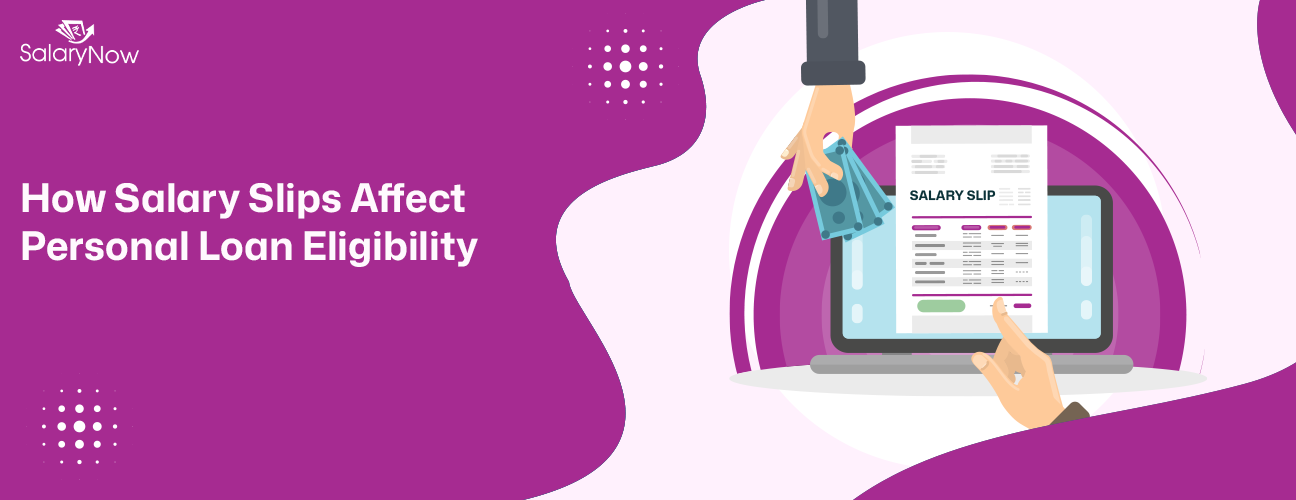
A salary slip, also called a payslip or pay slip, is a document issued by an employer to an employee, usually each month. It records the employee's earnings and deductions for a particular pay period.
Depending on the employer, a salary slip may include basic salary, allowances, deductions, net salary, designation, employee details, and employer information. The exact format can vary from one organization to another.
Why Do Lenders Ask for Salary Slips for Personal Loans?
Personal loans are generally unsecured, so lenders need to assess whether an applicant has sufficient and reasonably stable income to repay the amount borrowed. A salary slip provides documented information that can help with this assessment.
Proof of Income
A salary slip gives the lender evidence of your stated income. It can help the lender compare the income mentioned in your application with the supporting documents you provide.
Employment Information
Salary slips can contain details such as the employer's name, employee information, and designation. These details may help a lender understand your current employment situation.
Assessment of Repayment Capacity
The amount you earn each month is relevant to your ability to repay a new EMI. Lenders may consider your income together with existing financial obligations before deciding whether a new loan is affordable.
Income Consistency
A lender may ask for salary slips covering more than one month. Comparing recent salary slips can help show whether your income has remained reasonably consistent. The number of salary slips requested depends on the lender.
What Do Lenders Check on a Salary Slip?
Not every amount shown on a salary slip has the same significance. When reviewing the document, lenders may look at several parts of the salary structure and compare them with other information in the application.
Basic Salary
Basic salary is the fixed component of an employee's pay before applicable allowances and deductions. It forms part of the overall salary structure that a lender may review when assessing income.
Net Salary
Net salary is the amount remaining after applicable deductions. It generally reflects the money that reaches the employee after deductions shown on the salary slip. This can be useful when considering how much income is available to manage regular financial commitments.
Allowances
A salary slip may list allowances such as house rent allowance, transport allowance, or other components. The way these components are treated can vary by lender, so applicants should not assume that every allowance will be assessed in exactly the same way.
Deductions
Deductions may include provident fund contributions, professional tax, income tax, or other deductions shown by the employer. Existing loan-related deductions or obligations can also affect the amount of income available for another EMI.
Employer and Employee Details
The lender may review information such as the employer's name, employee name, designation, and other relevant details. The purpose is to verify the information provided as part of the loan application.
How Does Salary Affect Personal Loan Eligibility?
Salary is an important factor in personal loan eligibility, but it is not the only one. A higher income may increase repayment capacity, but the actual loan amount and approval decision depend on the lender's criteria and the applicant's overall financial profile.
Some lenders use measures such as the Fixed Obligation to Income Ratio (FOIR) or similar affordability measures to assess existing financial obligations in relation to income. The exact method and limits can vary by lender.
For example, an applicant with a regular salary but several existing EMIs may have less room for a new loan than another applicant with the same salary and fewer financial obligations.
What Other Factors Affect Personal Loan Eligibility?
A salary slip should not be viewed as a guarantee of approval. Lenders may consider several other factors, including:
- Credit score and repayment history: Previous payment behaviour and credit history can influence the lender's assessment.
- Existing EMIs and liabilities: Current loan payments and other obligations can reduce the amount available for a new EMI.
- Employment stability: The lender may consider your employment situation and how long you have been working.
- Age and other eligibility requirements: Lenders may apply their own age, income, employment, and documentation criteria.
- Employer information: Some lenders may consider the employer and employment profile as part of their assessment.
Can You Get a Personal Loan Without a Salary Slip?
A salary slip may be a commonly requested income document for salaried applicants, but documentation requirements can differ between lenders. In some cases, a lender may accept other documents or methods of verifying income, such as bank statements or other income and employment records.
If you do not have a salary slip, check the specific lender's documentation requirements before applying. Do not assume that the absence of a salary slip automatically means that you are eligible or ineligible for a loan.
What Documents May Be Required for a Personal Loan?
The exact documents required depend on the lender and applicant. Salaried applicants may be asked to provide some combination of the following:
- Recent salary slips
- Recent bank statements showing salary credits and regular transactions
- PAN card or other accepted identity documents
- Aadhaar card or other accepted address or identity documents
- Employment-related information or proof, where required
Before applying, check the lender's current document list and make sure the information in your application matches your supporting documents.
How to Prepare Your Salary Slip Before Applying for a Personal Loan
A few simple checks can make the application process easier and help you identify potential issues before submitting an application.
1. Keep Recent Salary Slips Ready
Keep the salary slips requested by the lender available and make sure they are readable and complete.
2. Compare Your Salary Slip With Your Bank Statement
Check that the salary credited to your bank account is consistent with the information shown on your salary slip. If you notice a discrepancy, clarify it before applying.
3. Review Your Credit Report
Your salary slip shows your income, while your credit history reflects how you have managed previous borrowing. Reviewing your credit report before applying can help you identify inaccurate information or missed payments that may need attention.
4. Understand Your Existing EMIs
List your current loan EMIs and other regular debt obligations. This gives you a clearer picture of how much additional monthly repayment you may be able to manage.
5. Keep Employment Information Updated
If you recently changed jobs or your employment details have changed, make sure the information in your application is accurate and consistent with your supporting documents.
Common Salary Slip Mistakes to Avoid
- Submitting an outdated or incomplete salary slip when the lender has requested recent documents.
- Providing information in the application that does not match your salary slip or bank statement.
- Ignoring deductions or existing financial obligations when estimating your repayment capacity.
- Assuming that meeting a minimum income requirement guarantees loan approval.
- Uploading unclear or unreadable documents that may delay verification.
Salaried employees who need funds quickly can also explore instant personal loan options for salaried employees.
Conclusion
A salary slip is more than a record of your monthly pay. For a personal loan application for salaried employees. it can help lenders verify income, review employment information, and assess repayment capacity. However, salary is only one part of the overall eligibility assessment.
Before applying, keep your salary slips and other documents ready, compare your income details with your bank records, review your credit profile, and understand your existing EMIs. Most importantly, check the specific eligibility and documentation requirements of the lender you plan to approach.
Frequently Asked Questions
1. How does a salary slip help determine personal loan eligibility?
A salary slip helps lenders verify your income, employment details, salary structure, deductions, and repayment capacity. Lenders may also compare recent salary slips with your bank statements and other information before making a lending decision.
2. What do lenders check on a salary slip for a personal loan?
Lenders may review details such as basic salary, net salary, allowances, deductions, employer information, designation, and other relevant employment details. They may use this information along with your overall financial profile to assess eligibility.
3. How does net salary affect personal loan eligibility?
Net salary represents the amount remaining after applicable deductions. Lenders may consider your net income when assessing how much you can reasonably afford to repay through a new EMI. However, eligibility also depends on factors such as existing EMIs, credit history, employment stability, and the lender's criteria.
4. Can I get a personal loan without a salary slip?
It may be possible with some lenders. Salary slips are commonly requested from salaried applicants, but certain lenders may accept alternative income-verification documents, such as bank statements or other employment and income records. Requirements vary by lender.
5. How many salary slips are required for a personal loan?
The number of salary slips required can vary depending on the lender and your application. Some lenders may request salary slips covering multiple recent months to assess income consistency and employment stability. Always check the lender's current documentation requirements before applying.
6. Does a higher salary increase my chances of getting a personal loan?
A higher salary can improve repayment capacity and may support eligibility for a larger loan amount, but it does not guarantee approval. Lenders may also consider your credit score, existing liabilities, employment stability, age, employer profile, and other eligibility criteria.
7. Can existing EMIs affect personal loan eligibility even if my salary is high?
Yes. Existing EMIs and other financial obligations can reduce the portion of your income available for a new EMI. Lenders may use affordability measures such as the Fixed Obligation to Income Ratio (FOIR) to evaluate your existing obligations in relation to income.
Disclaimer
Eligibility, loan approval, interest rate, sanctioned loan amount, loan tenure, documentation requirements, and repayment terms may vary from lender to lender and depend on the applicant's profile. Meeting a particular income or documentation requirement does not guarantee loan approval. Applicants should review the current eligibility criteria and loan terms provided by the relevant lender before applying.
This article is intended for general informational and educational purposes only. It should not be treated as financial, lending, investment, tax, or legal advice.