How to Manage Personal Loan Repayments During Financial Difficulties
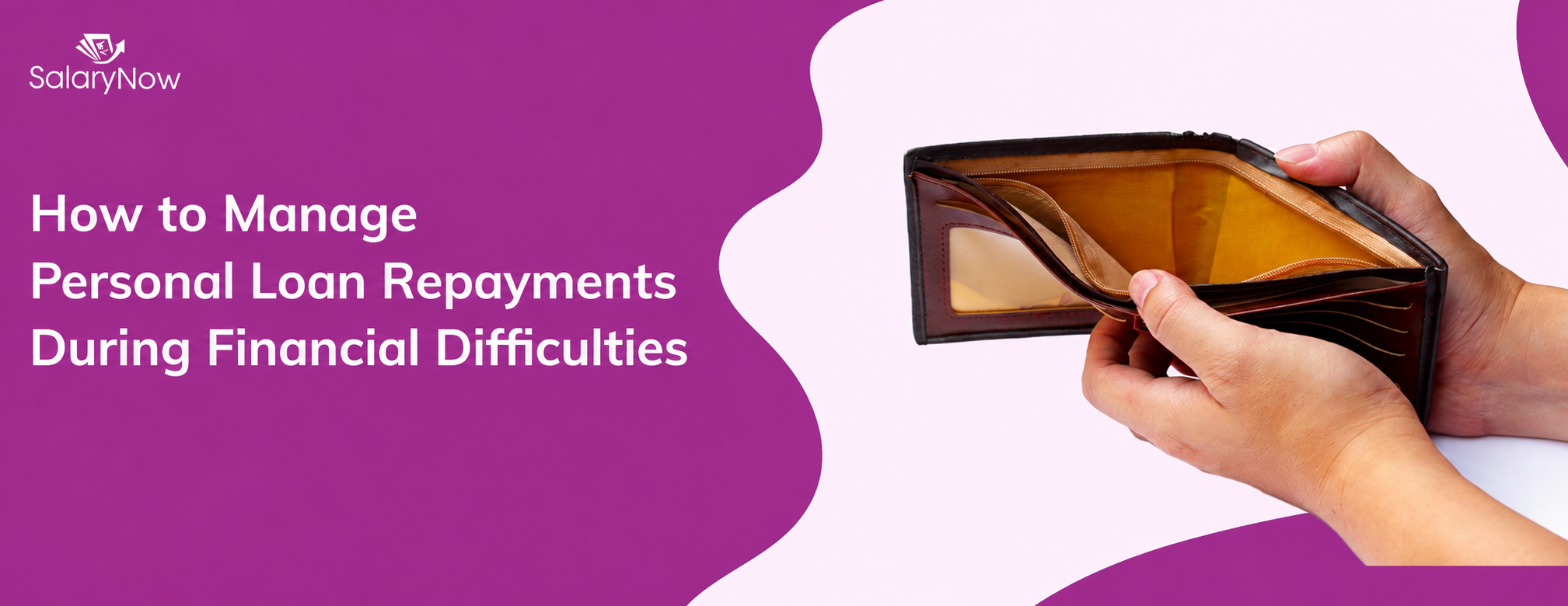
The positive side is that the occurrence of such temporary problems doesn't mean that one would have no option but to default or get into serious trouble regarding their financial standing.
This guide discusses the steps that one can take to handle the repayment of loans during tough financial periods.
Step 1: Understanding What's Causing the Problem with Loan Repayment
First, you need to identify the reason behind your problem.
Some of the common causes could be:
* Medical emergencies
* Losing or getting a pay cut in your job
* Increasing expenses at home
* Emergent issues in the family
* Multiple loan liabilities
* Lack of proper budget management
Knowing the reason behind it will help you make the right decision, instead of making an abrupt decision.
Remember that any type of financial crisis can affect anyone, so it is wise to sort out this problem at an earlier stage before it aggravates.
Step 2: Reviewing Your Budget Before Taking any Other Decision
Before borrowing any money from others, consider reviewing your finances first.
Prepare a simple table of three columns:
Essential Expenditures
* House rent
* Food
* Utility bill
* Tuition fees
* Medication
* Insurance
Your Loan Liabilities
* Your personal loan EMI
* Credit card bills
* Car loan
* Other loan instalments
Discretionary Expenditure
* Eating out
* Shopping
* Socializing
* Watching movies online
* Unnecessary spending
By cutting back on discretionary expenditure, you might be able to make your EMIs on time.
Step 3: Contact Your Lender Before Missing EMIs Rather Than Afterward
One of the most common mistakes that borrowers tend to make is delaying their communication with the lender when facing repayment problems.
If you face any repayment issues:
* Let the lender know about your problem at the earliest opportunity.
* Be upfront about your current financial situation.
* Learn about any potential repayment options, if any exist.
* Understand about additional charges.
Depending upon the policies of the lender and applicable laws, there could be many options available to eligible borrowers.
Ignoring repayment notices can put you in for extra costs, as well as harm your credit report.
Step 4: Don’t Take Out Several Loans to Repay Existing Debts
Taking out a new loan to repay an existing loan is something that should be avoided in general.
Although an instant loan for salaried person is quite convenient, borrowing again and again to repay previous debts might add up to your burden.
Some of the issues you might face with taking out several loans include:
* Higher EMIs
* Higher debt amount
* Extra interest payments
* Difficulties with repayment
Step 5: Look at Short Term Loans When It is Needed
Sometimes, short-term loans for salaried employees can assist in dealing with some financial emergencies, and in some cases the cost may be essential.
These include:
* Health emergencies
* Important home maintenance
* Important travel plans
* Urgent family costs
This option can be explored after you have analyzed your finances.
While applying for an instant personal loan online for salaried employees:
* Compare various reputable lenders
* Check their interest rates and fees
* Analyse repayment terms
* Borrow what you need.
Remember that your application for a loan will always be subjected to some requirements.
Step 6: Practical Tips to Ensure Repayment of Loans
The formation of good habits regarding loan repayments will minimize the amount of stress in the future.
Automation of EMI Payments
Creating automatic payment instructions will minimize the chances of delays in repayment.
Keep an Emergency Fund
Even a little emergency fund will be enough to pay for the EMIs during periods of financial difficulties.
Repayment of Higher Interest Loans
When having multiple loans, try to repay those with higher interest rates.
Control Your Expenditures
Use budgeting apps and spreadsheets to check your expenditures per month and see where you can cut down the expenses.
Borrowing Only When It Is Absolutely Necessary
Apply for loans only when really needed.
Continuous Revise of Your Budget and Finances
Evaluate your financial plans, income, expenses, and savings from time to time.
Step 7: Effect of Repayment on your Credit Score
History of repayment of debt is very important for calculating your credit score.
Making repayments of EMIs timely may:
* Give you a good history of repayment
* Help you become eligible for taking further loans
* Improve your credit score
Failure in repaying debts on time may have a negative effect on your credit score.
Loan repayment on time is an essential component of finance management.
Step 8: When to Apply for Personal Loan?
A personal loan should never be the first choice when facing financial constraints.
Apply only when:
* It is an essential expenditure.
* You have analysed your ability to repay the amount.
* Your emergency fund is inadequate.
* The EMI easily falls within your budget.
* You have compared your options with authorized lenders.
No matter whether it is about salaried people or any other kind of loans, borrow in such a way that helps, not hurts your finances.
The Importance of Responsible Borrowing
Responsible borrowing involves more than just getting a loan; it involves future financial security.
Some of the elements of responsible borrowing are:
* Borrow what you require.
* Scrutinize the loan agreement.
* Have knowledge of the interest rate, fees, and terms of repayment.
* Compare the lenders before borrowing.
* Avoid excessive borrowing.
Informed borrowing today could lead to better financial security tomorrow.
Conclusion
It takes proper planning, discipline, and quick action to manage the payments of a loan amid financial hardships. No matter whether you have applied for a Personal Loan for Salaried Employees or looking for further financial assistance, budget review, communication with your loan company, and responsible borrowing could work wonders. Prior to applying for any loan, ensure that you scrutinize lenders and have knowledge about all charges and that the repayment terms are within your means.
FAQs
1. Can I repay my personal loan during hard times financially?
Yes. You can start by reviewing your budget, cutting down expenses, and informing your lending company beforehand if there will be problems with repayment. Available options vary from lender to lender.
2. What if I miss my EMI?
If you miss paying an EMI, you might face extra charges, along with affecting your credit score. In case of missing the payment, you need to get in touch with your lender right away.
3. Can salaried employees apply for another personal loan?
Yes, eligible salaried employees can apply for another loan, provided that they fulfill all necessary requirements, such as income level, previous loans, credit score, documentation, and other factors.
Disclaimer
This article serves as an informational and educational resource only and should not be taken as financial, legal, or investment advice. Loan availability is subject to eligibility criteria, documentation, verification, credit assessment, and other terms of the lenders. Interest rates, processing fee, repayment term, loan amount, and other charges differ from one lender to another.